

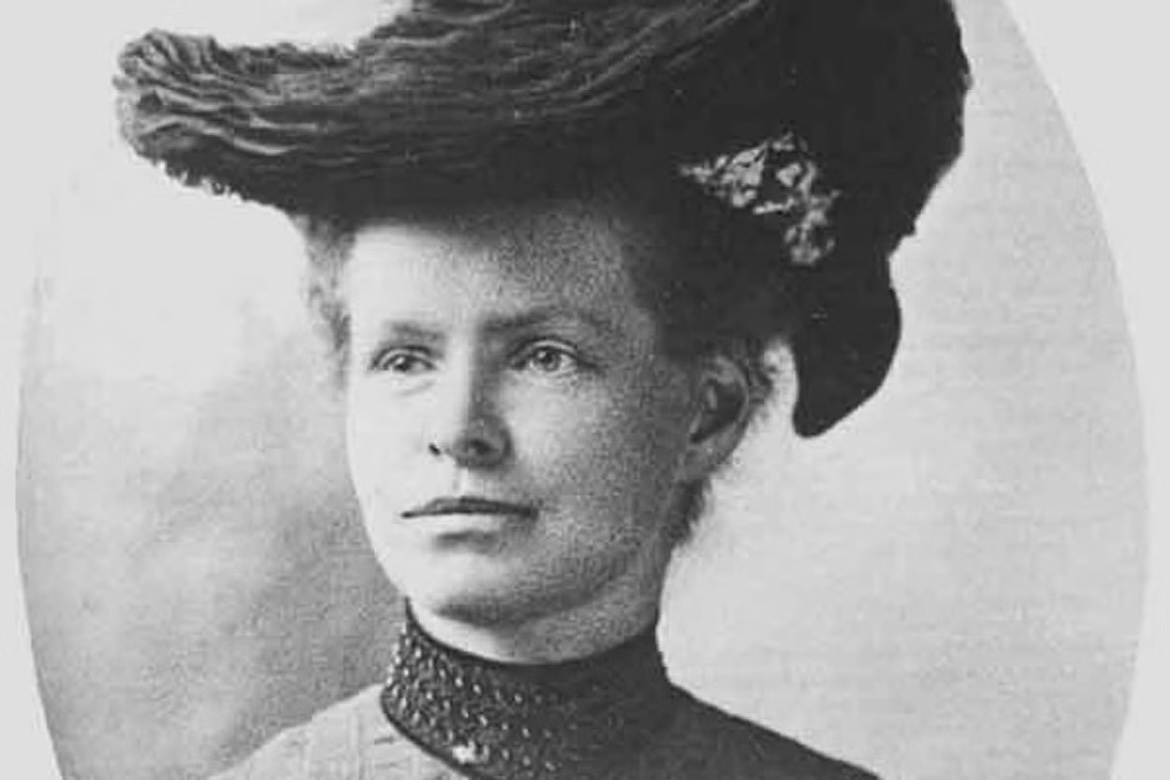
Born in Cavendish, Vermont in 1861, Stevens defied the era's rigid gender expectations. After earning degrees at Stanford University (1899–1900), she pursued her Ph.D. at Bryn Mawr College, graduating in 1903 at age 42. Her dissertation work under Thomas Hunt Morgan (later a Nobel laureate) laid the groundwork for what would become her magnum opus: solving the millennia-old mystery of biological sex determination.
Working with a $1,000 grant from the Carnegie Institution, Stevens conducted meticulous microscopic studies of *Tenebrio molitor*—the common mealworm. In 1905, she published her revolutionary findings in *Studies in Spermatogenesis*, documenting what no scientist had previously proven: sex is chromosomally inherited.
Stevens observed that male mealworms produced two distinct sperm types—one carrying a large "X" chromosome and another carrying a smaller "Y" chromosome—while females produced eggs containing only X chromosomes. She correctly deduced that fertilization by Y-bearing sperm produced males, while X-bearing sperm produced females. This XY sex-determination system provided the first concrete evidence supporting Mendelian inheritance and definitively refuted environmental theories of sex determination that had dominated since Aristotle.
Despite the crystalline clarity of her research, Stevens faced the "Matilda Effect"—the systematic denial of credit to female scientists. Her colleague Edmund Beecher Wilson published similar findings in the same year, though his evidence was less comprehensive and his theoretical framework weaker. Nevertheless, Wilson—a established figure in evolutionary biology—received historical priority for the discovery.
Recent historical analysis suggests Wilson may have adjusted his conclusions after viewing Stevens's data. Unlike Wilson, who allowed for environmental influences on sex determination, Stevens maintained that sex was purely chromosomal—a view modern genetics has validated.
Tragically, Stevens's career lasted just nine years. She died of breast cancer on May 4, 1912, at age 50, mere months before assuming a research professorship created specifically for her at Bryn Mawr. In that brief window, she published approximately 40 peer-reviewed papers, identified B chromosomes, and established the cytological foundation for modern genetics.
Thomas Hunt Morgan, who initially doubted chromosomal theories of inheritance, later wrote that Stevens was "capable and independent in research" with "no equal" among his graduate students. Today, geneticists recognize her work as the first demonstration linking a specific phenotype (biological sex) to observable chromosomal differences.
Stevens's story transcends historical trivia. She pioneered the research model—comparative analysis across multiple species—that remains standard in genomics. Her rigorous documentation of spermatogenesis in over 50 species validated the chromosomal theory of inheritance at a time when Mendel's laws were still controversial.
For modern researchers, Stevens represents the invisible labor that often underpins scientific breakthroughs. Her discovery of sex chromosomes didn't just resolve a biological mystery; it created the framework for understanding genetic inheritance, sex-linked disorders, and the chromosomal basis of heredity that defines 21st-century medicine.
Nettie Stevens didn't just study chromosomes—she proved that scientific truth, like the genetic information she discovered, persists regardless of who receives the credit.